
What's This?
Hi. This is your gentle radical space.
A place where you can meditate on how we can resist injustice, power and authority without violence. How we can be both radical and open to others. The space for a radical change of society, minds and hearts.
This podcast invites you to slow down and go deeper. Not into hotter takes or louder outrage, but into the roots—of ideas, communities, and ourselves. Each episode follows a single, honest question and stays with it long enough to matter. No jargon, no political propaganda. Just philosophy, thought experiments, and practical ways to act without copying the harms we oppose.
Our north star is simple: How can we be radical and open at the same time? If you’re tired of shouting matches on one side and empty slogans on the other, come stand in the space between—where conviction meets curiosity, and change starts from the ground up. Listen in, think aloud with us, and take away something you can try tomorrow.
I decided to start this podcast because much of my work isn’t in English—or, when it is, it often lives in academic journals that aren’t easily accessible to everyday readers. I’ve written books in Czech about radicality and published a number of peer-reviewed articles in English, but here I want to open that conversation to a wider public. The podcast is my way of sharing an ongoing, systematic exploration of how radicalism and dialogue meet: how we can be principled without being dogmatic, courageous without being cruel, and how “gentle radical” practice can shape real communities, not just theories.
Why “Your Gentle Radical”?
Because each word names a commitment. Your signals second-person agency: this isn’t a guru brand but a companionable voice inviting your practice and judgment. Gentle names the method—patient, non-violent, and clear in how we ask hard questions. Radical returns to radix, the root: we go past symptoms to foundations without mirroring the harms we oppose. The podcast is independent and unaffiliated; it’s not a community arts platform or a biography, but a series of short, reflective episodes about rooted openness in everyday life.
I also want to acknowledge the namesakes. Gentle/Radical in Cardiff is a cultural initiative working at the intersection of art, community, and social justice—building projects “from the ground up.” Our aims resonate, even as my format differs. And A Gentle Radical (Allen & Unwin, 2022) is Gareth Hughes’s biography of New Zealand Green leader Jeanette Fitzsimons; I share the spirit of principled, hopeful change while pursuing a broader, theme-based exploration rather than one person’s story. Different mediums, same desire to deepen public life with care and courage.
Listen to other radical podcasts by people who share the same idea – I recommend especially Radical Podcast and Radical Nuance by Eleanor Goldfield. As I am deeply comitted to the idea of sharing and cooperation rather than competition and rivalry, if your project deals with similar topic, do not hesitate to contact me so we can share links & the audience!
Author

I am Jan Motal, an experimental artist, philosopher, and university teacher based in Prague, Czech Republic, working where ideas meet practice—in classrooms, alternative art communities, and DIY projects. My research and creative work explore how power, care, and responsibility are shaped in our lives and society. I favor open-source tools, slow craft, and honest dialogue over hype and hot takes, and I have led workshops from analog film to biophotography. I aim to promote the values of human dignity, sustainability, and participation—including nonhuman actors such as nature, machines, and even AI. That is why I consider all my work to be co-authored by me and “the Collective.”
I’m honored to be a founding member of the artistic collective Dílo. Be sure to check out our website and projects!
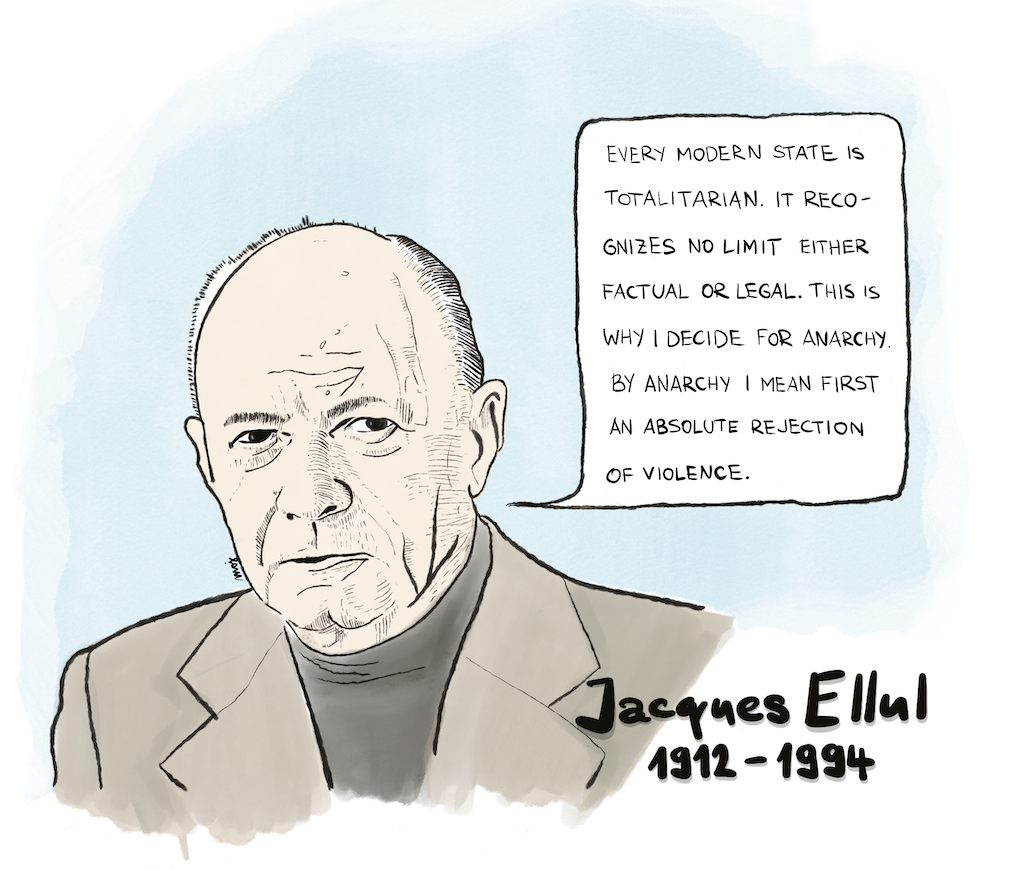
I identify as an anarchist. Broadly speaking, I would like to live in a just and free society where everyone can realize their potential, be creative, and live a decent, fulfilling life. So far, this is a universal vision, independent of any political ideology. Anarchism means nonviolence and a consistent challenging of power (both inner and outer) that ravages human potential and dignity. This is a vision of the democracy of life, not the democracy of politics—and therefore I stand in a long line of democratic thinkers, including William James, who hardly considered himself an anarchist. But, in accordance with Jacques Ellul, I do not think that an anarchist society (without a state, organizations, or hierarchy) is possible, although the anarchist struggle for this kind of future is essential. I do not believe in a global revolution bringing a new social order, but in the creation of new institutions from the grassroots. Anarchy “first implies conscientious objection—to everything that constitutes our capitalist (or degenerate socialist) and imperialistic society (whether it be bourgeois, communist, white, yellow, or black).” ✻
I am a Christian as well. I was baptized in the Roman Catholic Church, but I soon realized how inconsistent that institution is with my understanding of Christianity. This hardly means that Catholicism is worse than Evangelicalism or other traditions. I now consider myself a Christian “freelancer,” relying strongly on a personal relationship with God and following Jesus in my everyday struggle with earthly powers—speaking theologically. Although I am not a member of any Quaker meeting, I feel a deep connection with their approach to Christianity and like to think of myself as walking in paths paved by the Friends.
How can you contact me?
Visit my webpage or send me email.
Episodes
-
Episode 4 – The Works of Mercy (March 2026)
Dorothy Day is easy to sentimentalize and much harder to face. This episode follows her not as a plaster saint but as a journalist, bohemian, mother, convert, and radical who refused to divide inner life from political action. Her story moves through loneliness, conversion, solidarity with workers, and a form of faith that demanded not private purity but vulnerable presence.
At the center is a hard claim: Day’s radicality did not grow from moral superiority, but from ruthless honesty about failure, shame, desire, and suffering. That openness became action—houses of hospitality, life among the poor, resistance to war, and the conviction that love without community is only an idea.
Yes, I know—my vowels go on holiday and the Slavic accent tags along. For crystal clarity, here’s the full transcript.
Music and voice reading examples:
ElevenLabs gen AI
Extras:
The official Dorothy Day Guild website.
The Catholic Worker Newspaper Archive with Dorothy Day’s writings.
Marquette University’s Dorothy Day & Catholic Worker Collection.
The detailed Dorothy Day – Catholic Worker archival finding guide.
-
Episode 3 – The Death of God (December 2025)
Radical theology doesn’t mean edgy—it means going to the root. Following Thomas J. J. Altizer, the “death of God” theologian, this episode moves through darkness and “pure grace” into a sharp political question: when God is imagined as a distant sovereign, religion becomes an apparatus of authority. When that God dies, authority doesn’t vanish—but it loses its sacred alibi.
This episode treats Thomas J. J. Altizer’s “death of God” as more than a slogan: the collapse of a particular image of God—the distant sovereign, cosmic judge, and sanction behind sanctions. What opens then is kenosis: the loss of the fantasy of control and innocence, and the difficult work of acting without moral self-congratulation. Along the way: an “epiphany of Satan,” a conversion experienced as “pure grace,” and a hard claim that hits both church and state—authority is the fundamental problem of theological and political life. The closing question is simple and unsettling: where have you lived a small “death of God”—and what started to grow in that exposed place?.
Yes, I know—my vowels go on holiday and the Slavic accent tags along. For crystal clarity, here’s the full transcript.
Music and voice reading examples:
ElevenLabs gen AI
Extras:
Carl A. Raschkes's Altizer's Theology in Context.
-
Episode 2 – Common Decency (November 2025)
What if the root of radical politics isn’t a party line but an everyday practice of solidarity? This episode reads Orwell back into the left: not as an anti-socialist icon, but as a defender of the moral intelligence of ordinary people—their common decency. We trace this thread from Orwell through Michéa to Mauss: from Orwell’s clarity in The Road to Wigan Pier and Nineteen Eighty-Four, through Michéa’s critique of the “ideology of Good,” to Mauss’s gift as a relational logic—give, receive, reciprocate—that precedes any program.
Along the way: the Spanish Civil War and the discovery that truth can be falsified from above; why resentment makes “alienated rebellions”; and why authentic change grows from neighborly cooperation, mutual aid, and speech that isn’t falsified. The wager here is simple and demanding: a socialist imagination compatible with common decency—radical without contempt, firm without cruelty.
Yes, I know—my vowels go on holiday and the Slavic accent tags along. For crystal clarity, here’s the full transcript.
Music and voice reading examples:
ElevenLabs gen AI
Extras:
Marcel Mauss's The Gift.
Jean-Claude Michéa's Rebellion and Coservatism.
George Orwell's The Road to Wigan Pier, Homage to Catalonia and Nineteen Eighty-Four.
David Wieck's The Habit of Direct Action.
-
Episode 1 – Radical, Not Extreme (October 2025)
Radical, Not Extreme introduces Your Gentle Radical, a monthly podcast about going to the root of things without becoming rigid or violent. It clarifies the difference between radicalism, extremism, and fundamentalism, tracing “radical” from Latin and 19th-century democratic reform to today’s misuses that blur dissent with extremism. The guiding question: How can we be radical and open at once—refusing domination without reproducing it? Extras and transcripts at yourgentleradical.space. Listen, subscribe, and share widely.
Yes, I know—my vowels go on holiday and the Slavic accent tags along. For crystal clarity, here’s the full transcript.
Attribution of the music:
Soulja Unit - Beyond The Moon (2012) by SouljaUnit -- https://freesound.org/s/609603/ -- License: Creative Commons 0
Extras:
You can read more about Ellul's anarchism here.